Guiding firefighters through flames
About the client
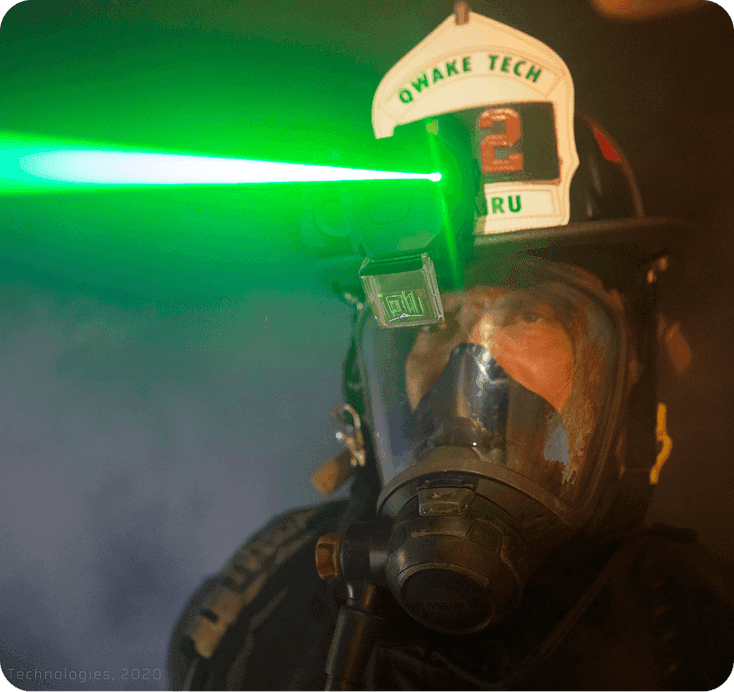
C-THRU is a platform built by Qwake Technologies, designed to change how firefighters communicate during live incidents. Before it, the commander outside and the team inside were both relying almost entirely on radio. Qwake's side of the system includes the Navigator, a helmet-mounted AR display that uses thermal and edge detection to help firefighters see and move through zero-visibility smoke.
The task
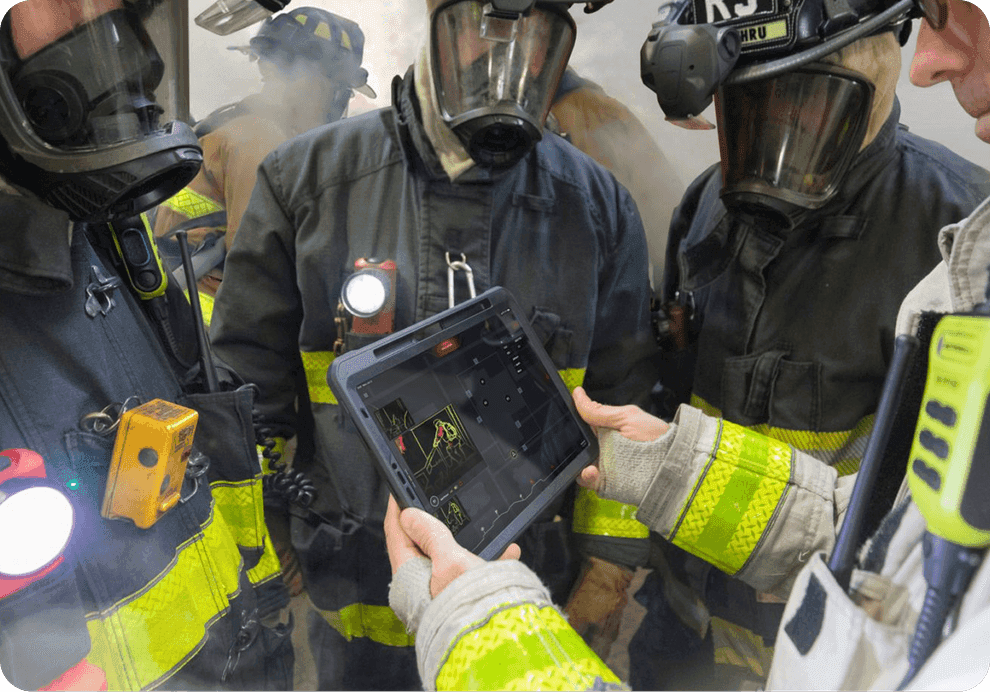
We were brought in to design the visual language that sits on top of that feed, the markers, colours and indicators that turn it into something a commander can direct through and a firefighter can read instantly, together with the Command Tablet app that gives the commander their view of the incident and the tools to act on it. The goal wasn't to replace radio, but to give both sides something better.
Type
AR HUD
iPad App
Logo Refresh
Who & When
Designer Duo
2021
Tools
Sketch
Principle
Creating a visual language
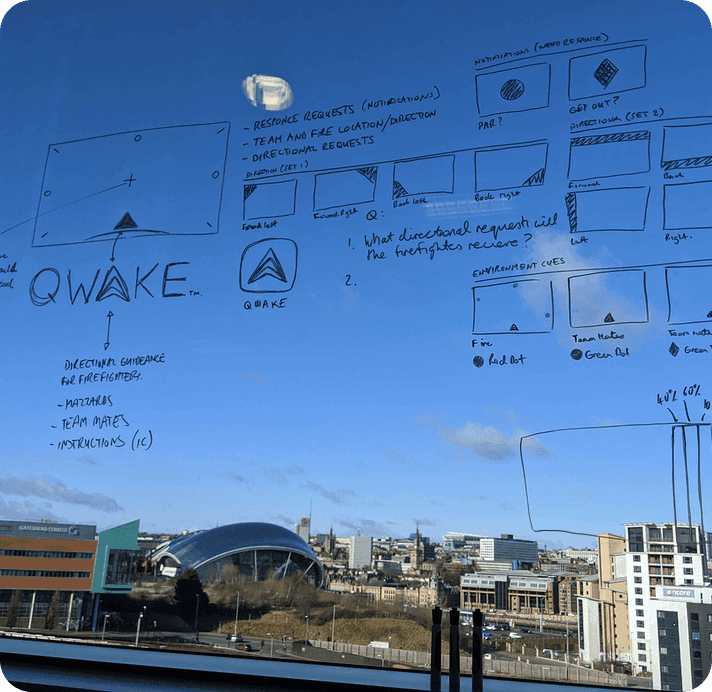
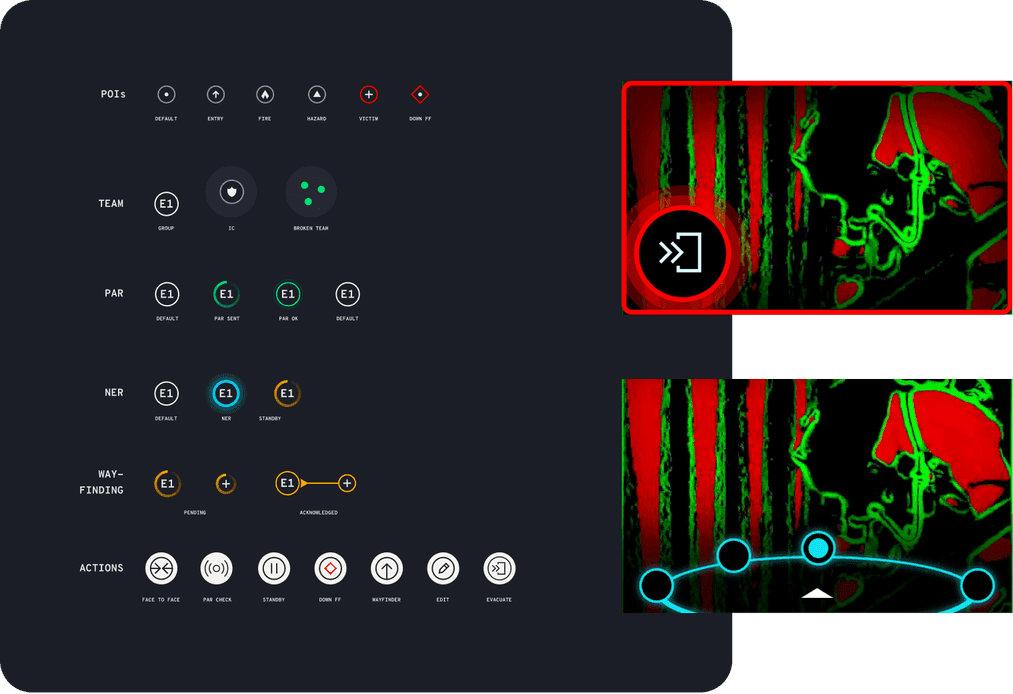
Text could not be used for the HUD: the screen was too small, and with every second counting there was no room for reading words. Every status and every instruction had to be recognisable on its own, instantly and instinctively. And whatever we designed couldn't just work in isolation, it had to sit on top of the Navigator's thermal and edge detection feed without fighting it, and still mean exactly the same thing on the Command Tablet as it did on the firefighter's helmet.
We built a single visual system from there: a consistent set of colours, markers and indicators used across both surfaces, so nothing needed a legend and nothing needed more than a second to interpret. What the commander marked on the tablet was the same shape and colour the firefighter saw appear in their eyeline, no translation required in either direction.
Finding the feel
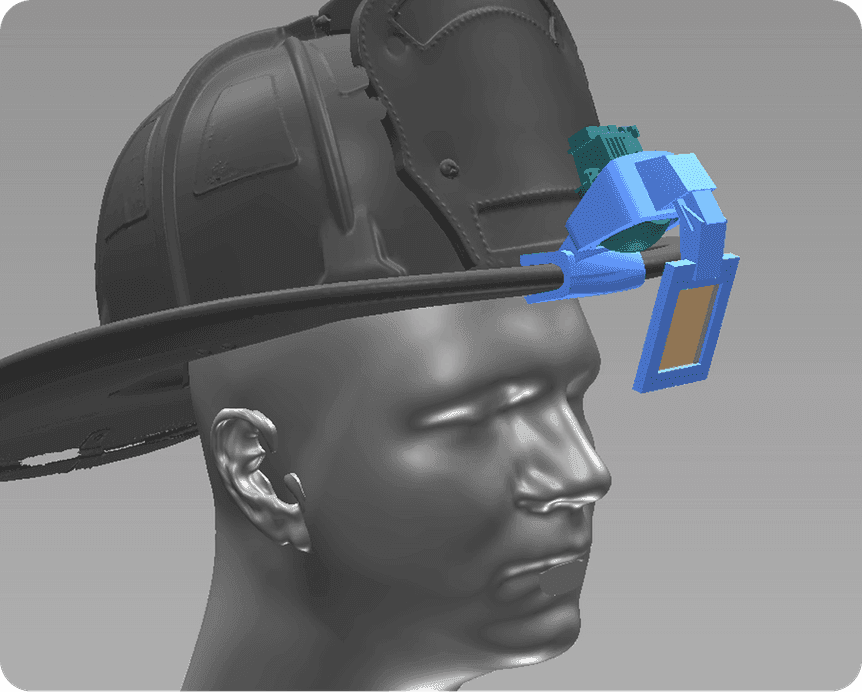
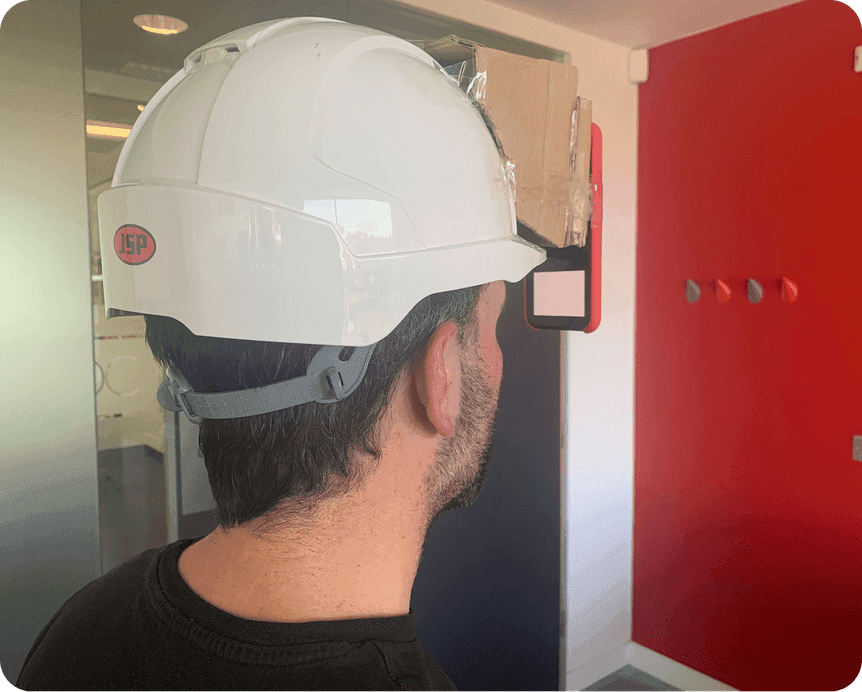
To design for the Navigator, we needed to understand what it felt like to have a screen inches from your eye, the way a firefighter would experience that visual layer in a smoke-filled building. We didn't have the device yet, so we made do with a hard hat, a phone, and enough determination to look completely ridiculous in the office.
The Command Tablet
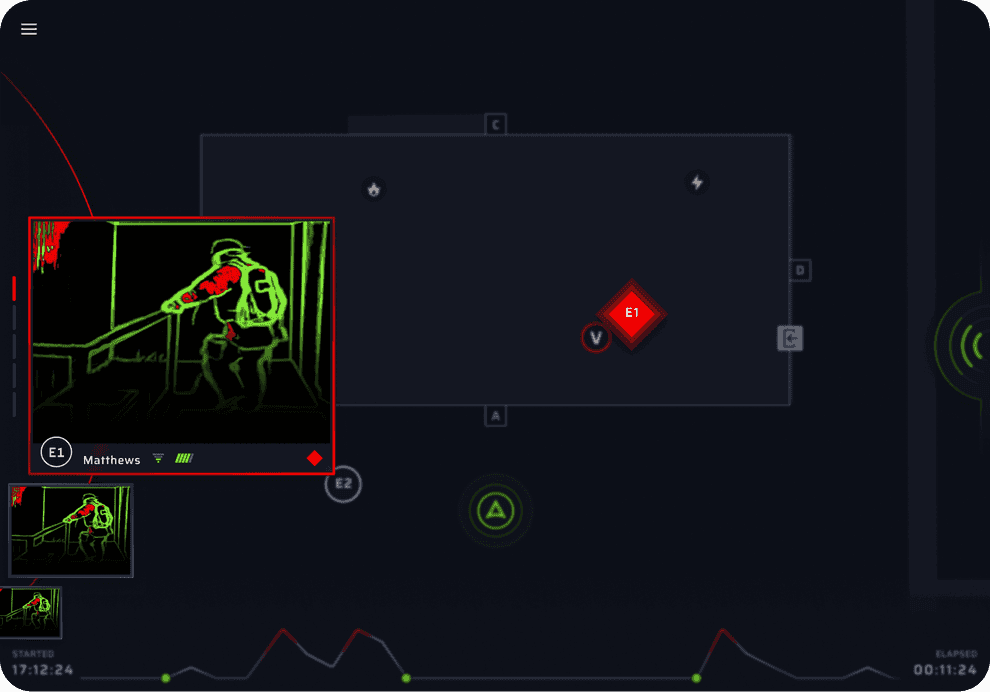
The commander needed everything in one place: a live incident map, access to every firefighter's HUD feed, and a timeline marking the incident as it evolved, all in one viewport with no digging through menus. That's a lot to hold without it turning into noise, and the hard part was fitting it all in without the tablet collapsing under its own weight.
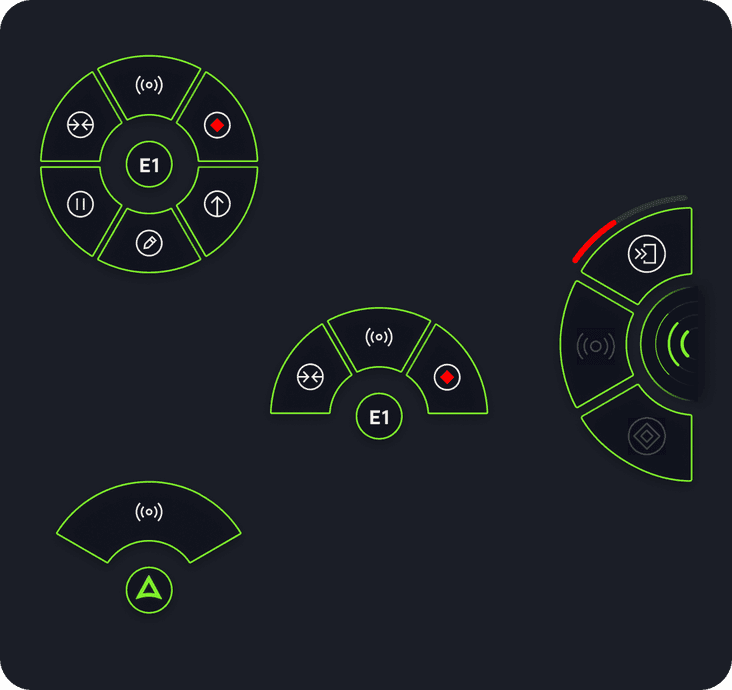
Gestures carried a lot of that weight. Actions were press-and-hold rather than tap, deliberate by design, because when an accidental evacuation order doesn't bear thinking about, you build the friction in on purpose. Fast to execute when it mattered, close to impossible to trigger by accident.
The Outcome
By the end of it, commanders could see exactly what their firefighters were seeing in real time, for the first time, instead of relying purely on radio. Qwake carried that momentum into a wider release in late 2021, backed by government contracts including a $1.4 million Department of Homeland Security award and a partnership with the US Air Force.