Stepping into wonder
About the client
The CS Lewis Company is a small team that manages the intellectual property rights of Clive Staples Lewis, better known as CS Lewis. He's best known for the Chronicles of Narnia, but he was just as active as a philosopher and Christian thinker. The company are starting a creative engagement around a Netflix Narnia film releasing in early 2027 on IMAX, directed by Greta Gerwig, with a large marketing budget from Netflix.
The task
Three things at the highest level: give the company a digital presence they didn't have, build a community for Lewis fans across his whole body of work, and bring Lewis himself to life in a way people could return to daily.
The deeper problem: people want meaning and wonder in their everyday lives, and most digital products don't help with that. They want to talk through big questions, but they're tired of chatbots. They want depth, but Lewis's catalog is huge and most people only know Narnia.
Type
Mobile App
Illustration
Who & When
Lead Designer
2026
Tools
Figma
Procreate
Rive
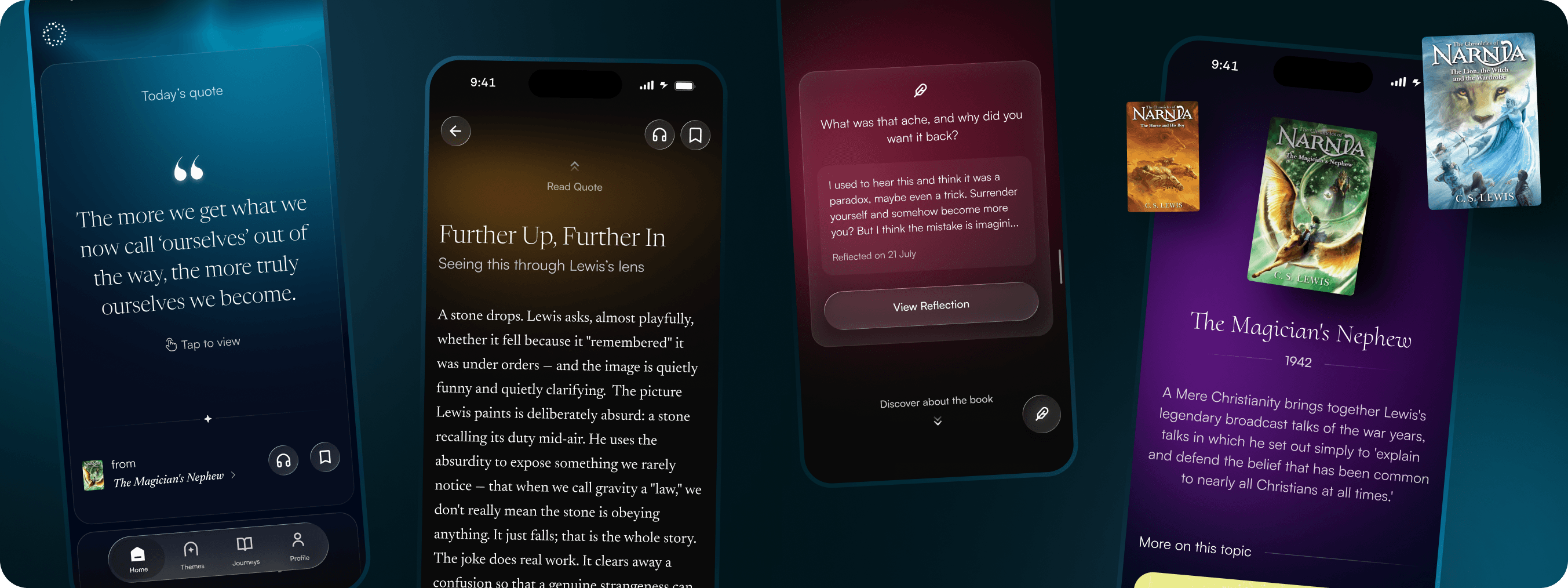
The research guidance
Research told us something we didn't expect: this wasn't a fragmented audience. We went in assuming we might be building for two or three totally separate groups, believers, Narnia fans, casual readers, but people kept landing on the same place. Wonder. That word came up constantly, no matter where someone was starting from.
We also learned something about Lewis himself that reframed the whole project. He didn't convert to Christianity until 32. Before that, he spent years in doubt, even atheism. That mattered, because it meant the app didn't have to speak from a place of certainty. It could hold the same doubt and searching that Lewis lived through, which is closer to where a lot of our users actually are.
One more data point that shaped things: in Hallow, a comparable devotional app, roughly 40% of users don't identify as Catholic. The category is more curious and less homogenous than it looks from outside. People aren't necessarily looking for religious content. They're looking for something to sit with.
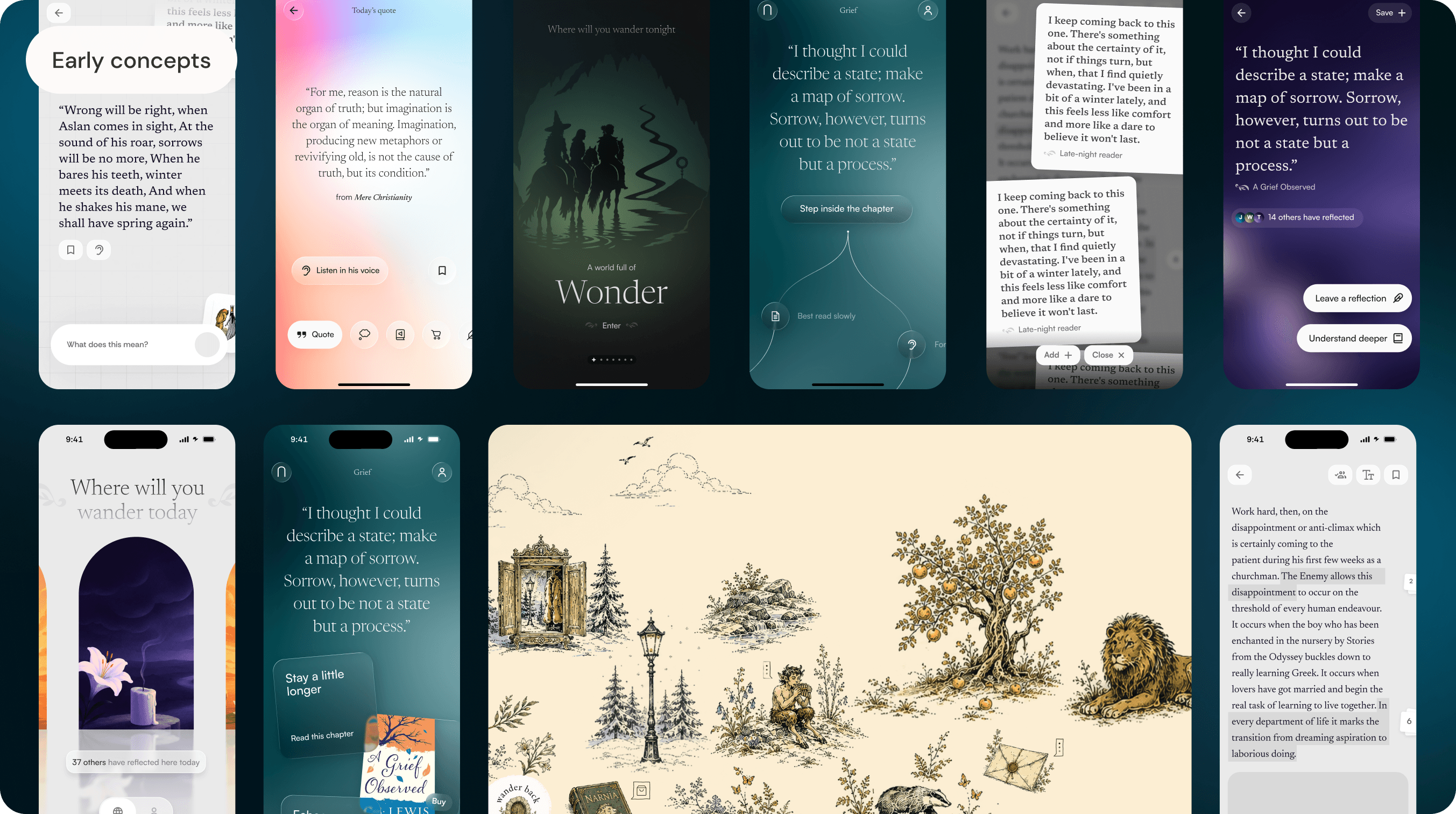
Finding the shape
Lewis's work is full of interconnecting themes. Someone reading Narnia might land on an idea that shows up again in a letter, an essay, something written decades apart but speaking to the same question. Just handing people the raw catalog, fiction, letters, essays, theology, would have built an e-reader, not a product.
So the real design question became: how do people explore the catalog and actually see those connections, rather than reading book by book in isolation? For our Spiritually Curious Explorer especially, someone with casual Narnia familiarity and no real way into the rest of Lewis, the catalog needed to feel less like a wall of text and more like a place of wonder.
Leave changed
That became our guiding promise for the whole product: leave changed. Not "read more." Not "finish this." Everything after that had to answer to it.
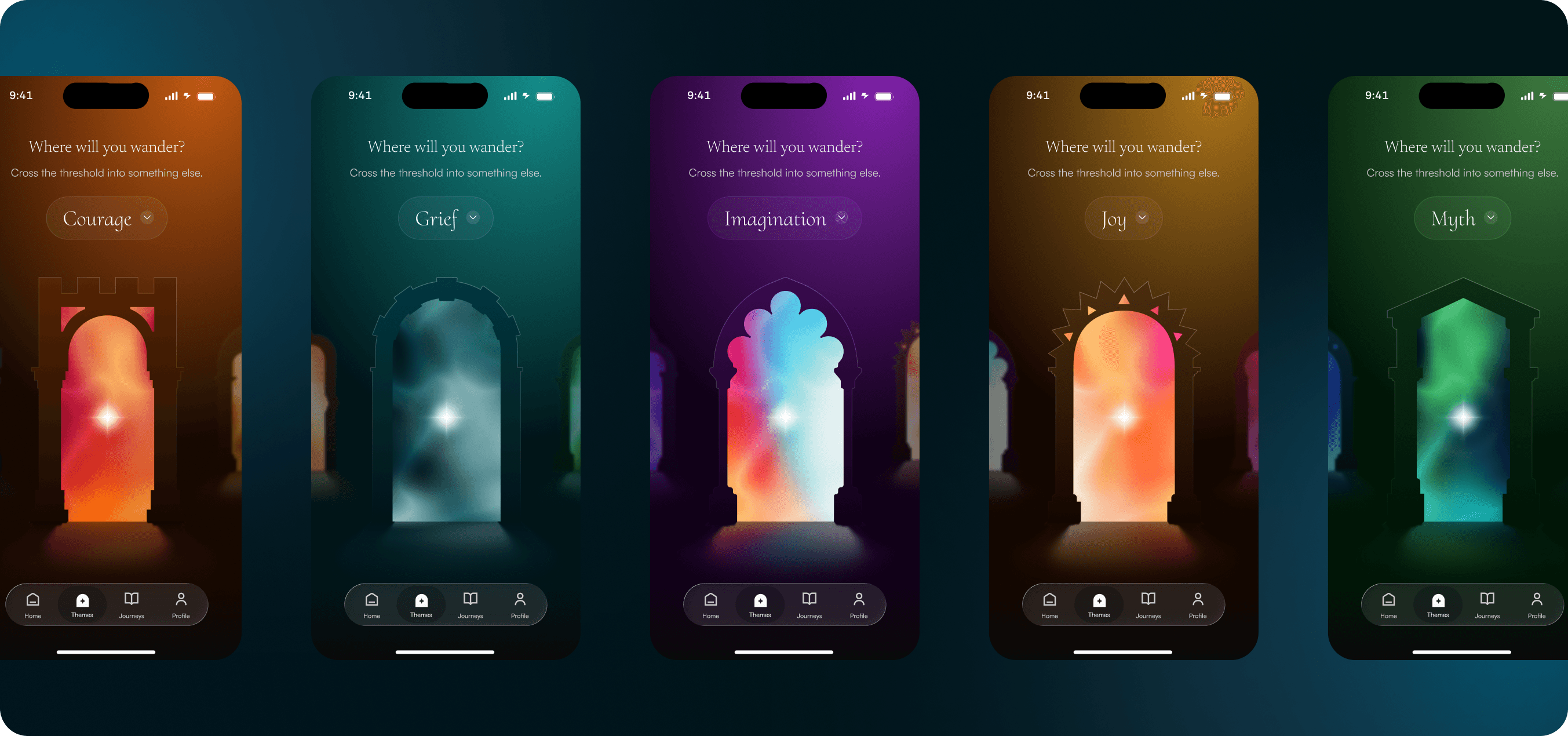
To make wonder into something usable, we sorted the entire catalog into 14 themes: joy, grief, myth, doubt, and so on. In the app they're worlds, each with its own portal to step through. Someone can open the app already knowing what they want, or just wander in from wherever they happen to be that day.
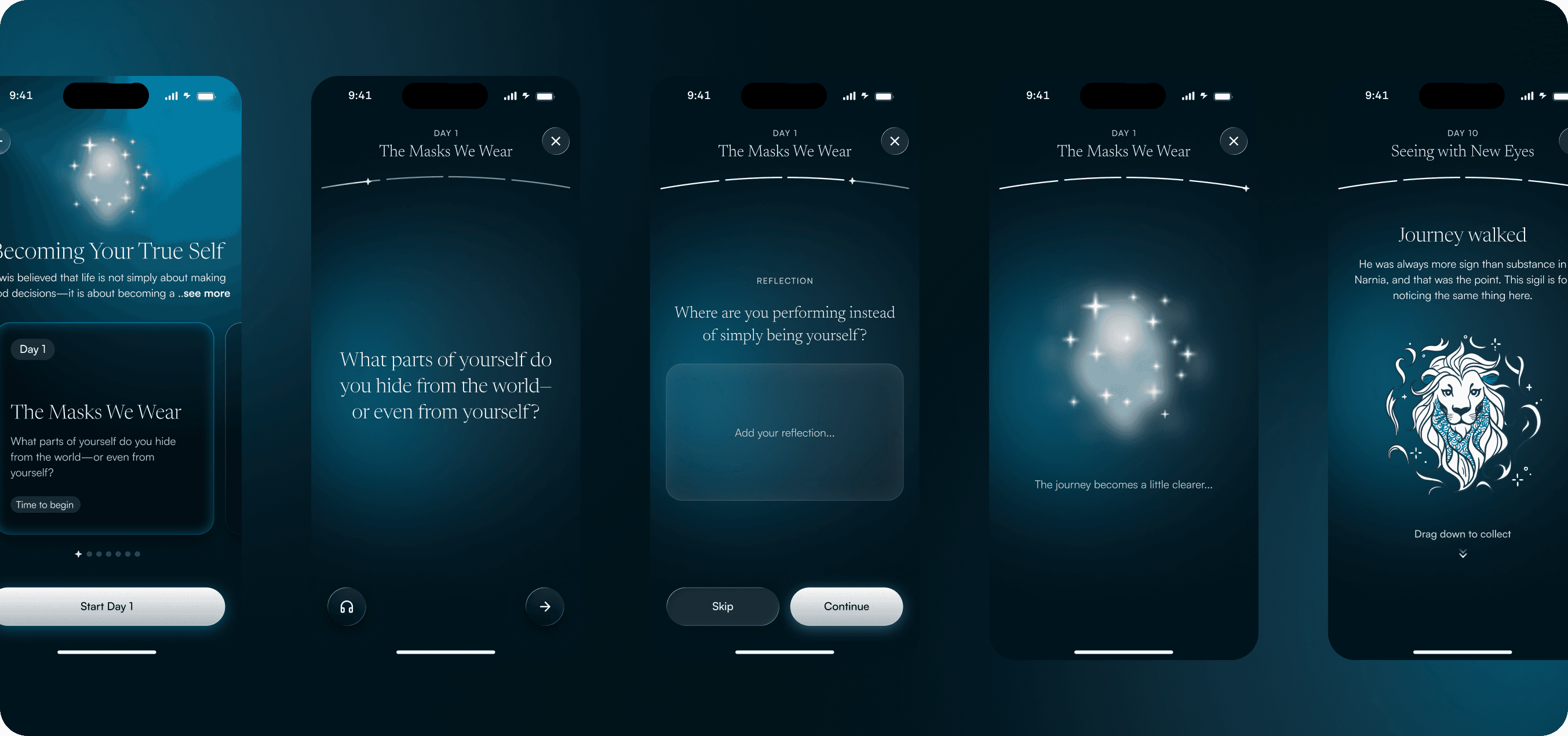
Wonder alone won't bring someone back tomorrow, though. So alongside the worlds, we built a second layer: guided journeys. Readers can wander freely, or follow a set sequence of passages we call a journey, each one built around a question to sit with rather than a straight answer. No right direction, just an invitation to think and move from there.
Something to keep
The hardest thing to design for was proof. "Leave changed" isn't something a user can report back to us. We needed small, tangible moments that made the change feel real, even briefly.
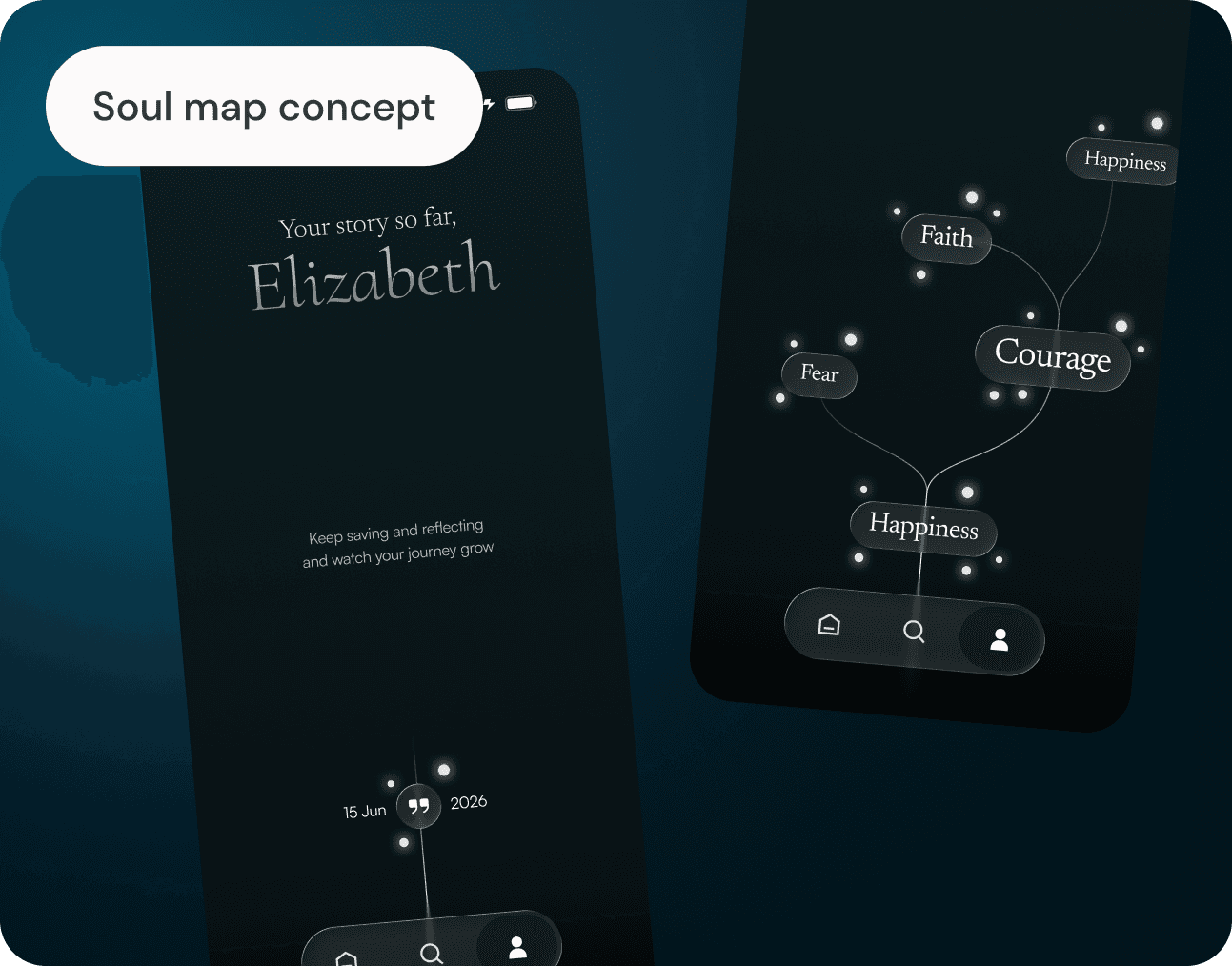
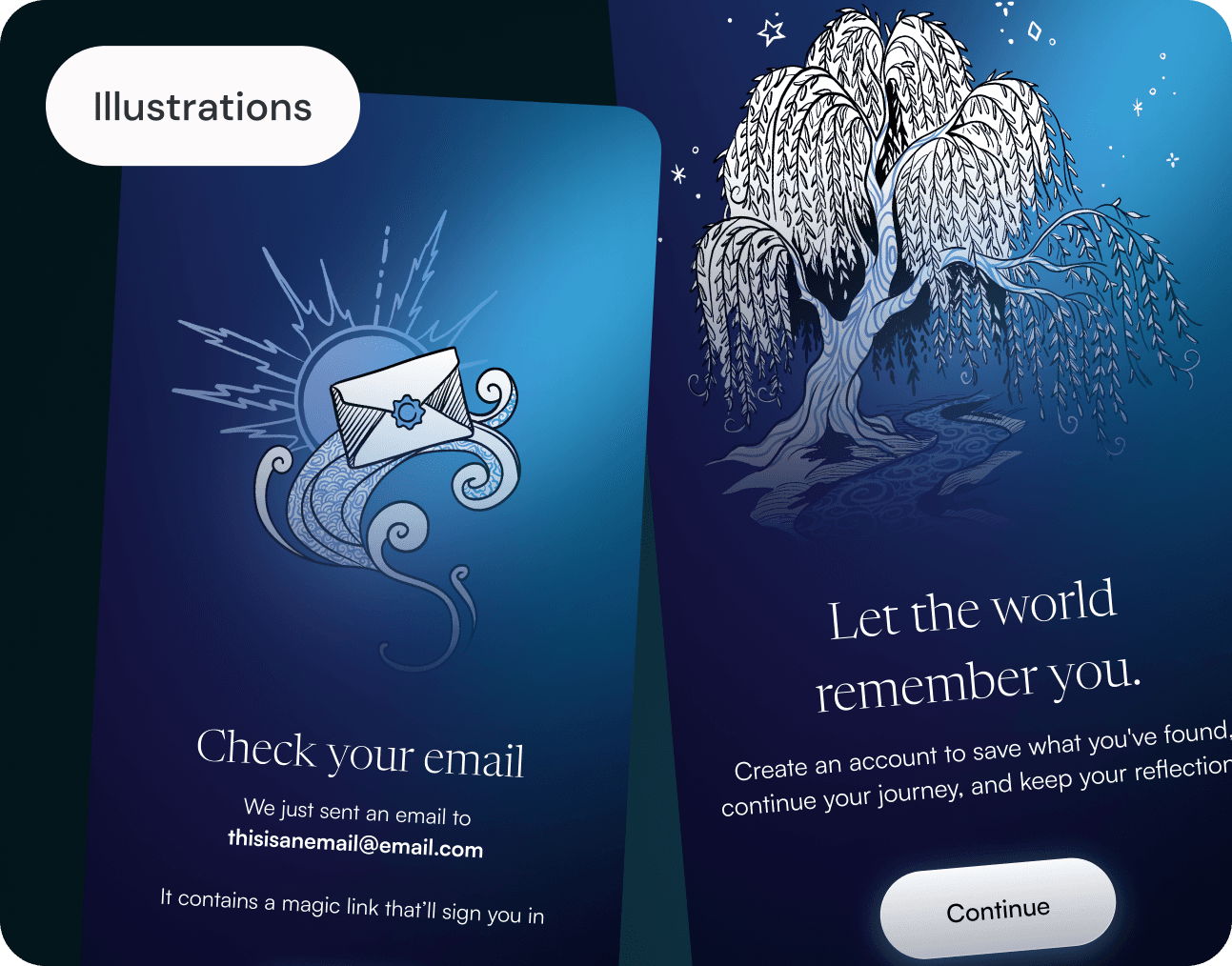
Each chapter ends with an illustrated keystone and a short reflection the reader writes for themselves, saved to their profile to revisit later. Nobody else sees it. On the roadmap is something we're calling the soul map, a way of visualising the themes and worlds someone has moved through over time, currently being explored as a growing tree or a constellation. Show someone where they started and where they've ended up, without ever asking them to self-report it.